Laurent Hou
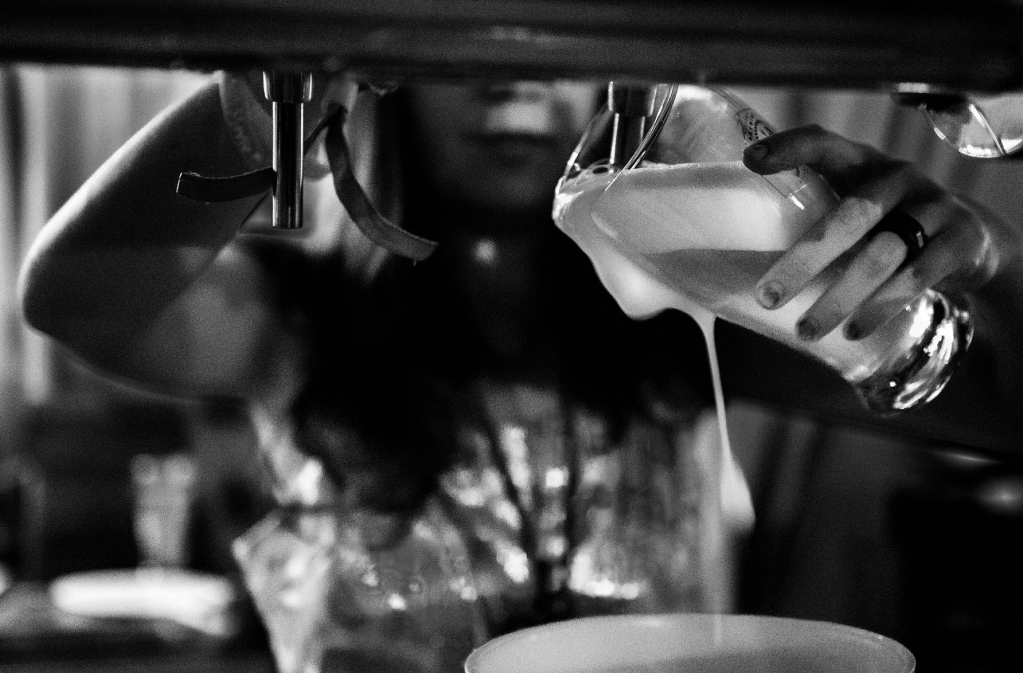
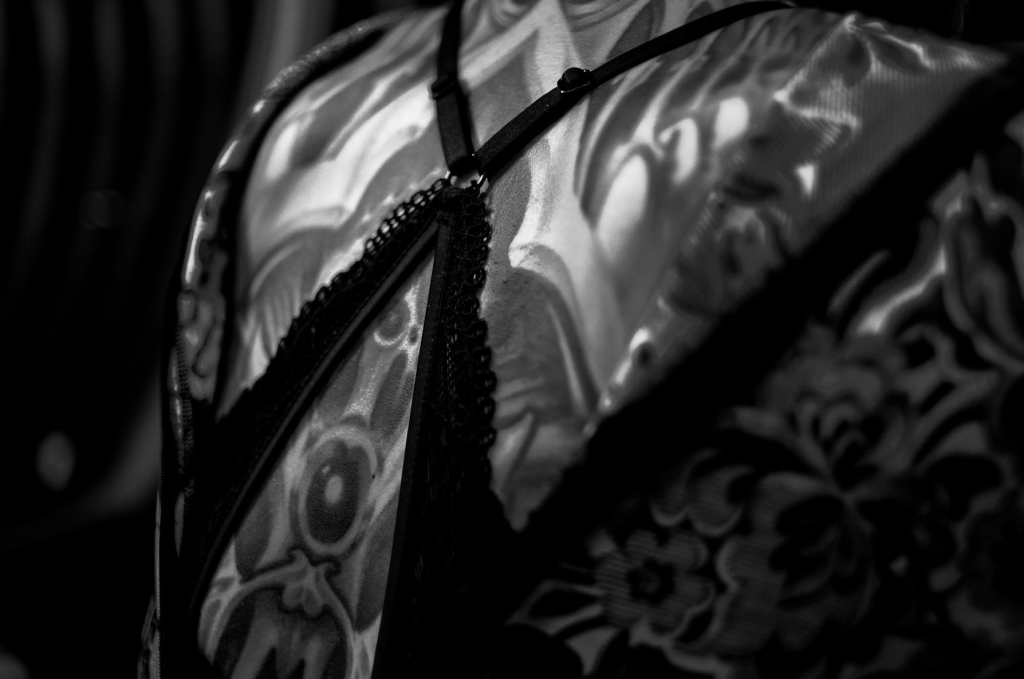
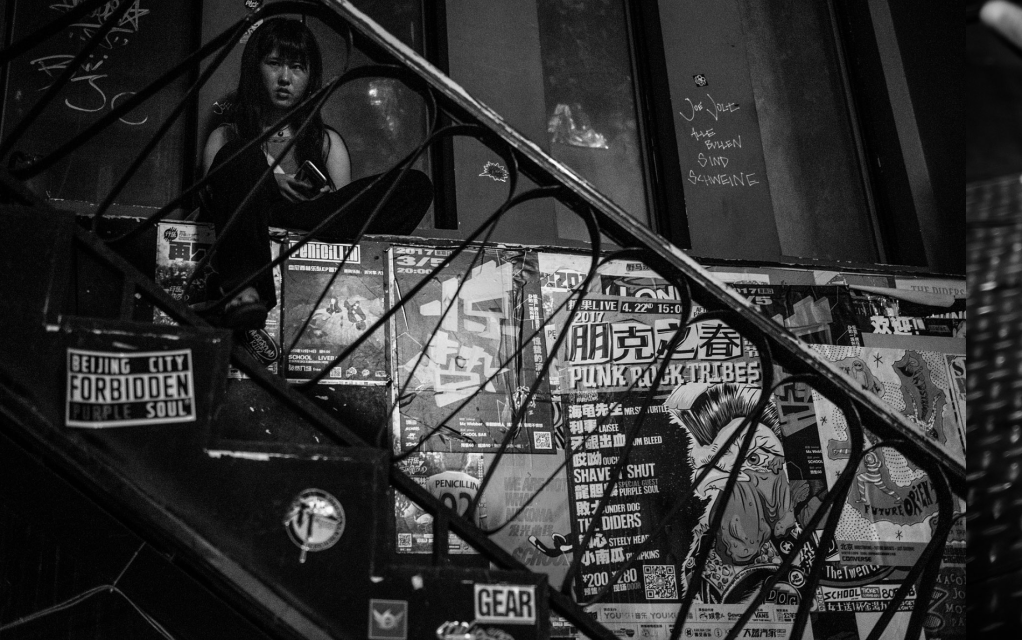
A little before the beginning of a period of artistic celebration in Arles, I met Laurent Hou, a mixed-race photographer and visual arts enthousiast since childhood : a look at his artistic influences, technical aspects of photography, the importance of medium and presentation as well as his cultural and historical reflections. And of course at his latest work, Beijing Reminiscences. Encounter.
Beijing Reminiscences is a series of impressive black-and-white images. How did this project begin, and what were the main sources of inspiration behind it?
“Let’s say that the school of chiaroscuro, classical painting, and the Renaissance have significantly influenced me. Someone I really liked and who continues to influence me is Gustave Moreau, with his unique color treatments and symbolism. His works are not always finished, sometimes there is a form of unfinished minimalism that is kind of interesting. However, I am not into minimalism. There’s a play of light in the painting with all the colors. These are things that speak to me. On the other hand, there’s also Chinese painting and calligraphy that have an influence on me”.
Your dual French-Chinese culture is clearly important to you and to your artistic process. Has it become a method of working for you as well?
“Immersed in Beijing’s underground art scene, I went through a period of intense creative experimentation. Over the course of four years, I documented the city’s nightlife, capturing the atmosphere and energy of rock venues, alternative clubs, and bars across central Beijing. During this time, I also explored mixed-media practices and collaborated with artists from a wide range of disciplines”.
How important is the technical aspect of photography to you? In your artistic work, to what extent is technique essential ? Would you say your approach is driven more by emotional or by technical mastery?
“Technique matters precisely so that it eventually disappears. I think this applies to many forms of art. Empty virtuosity alone is never enough. The greater your technical mastery, the less constrained you become, and the freer you are to express yourself. The goal is not always to push technical complexity further, but to reach a point where expression becomes immediate because technical obstacles no longer exist. With a strong enough command of technique, you know how to use it with precision and intelligence, yet without drawing attention to it. It should become invisible rather than demonstrative”.
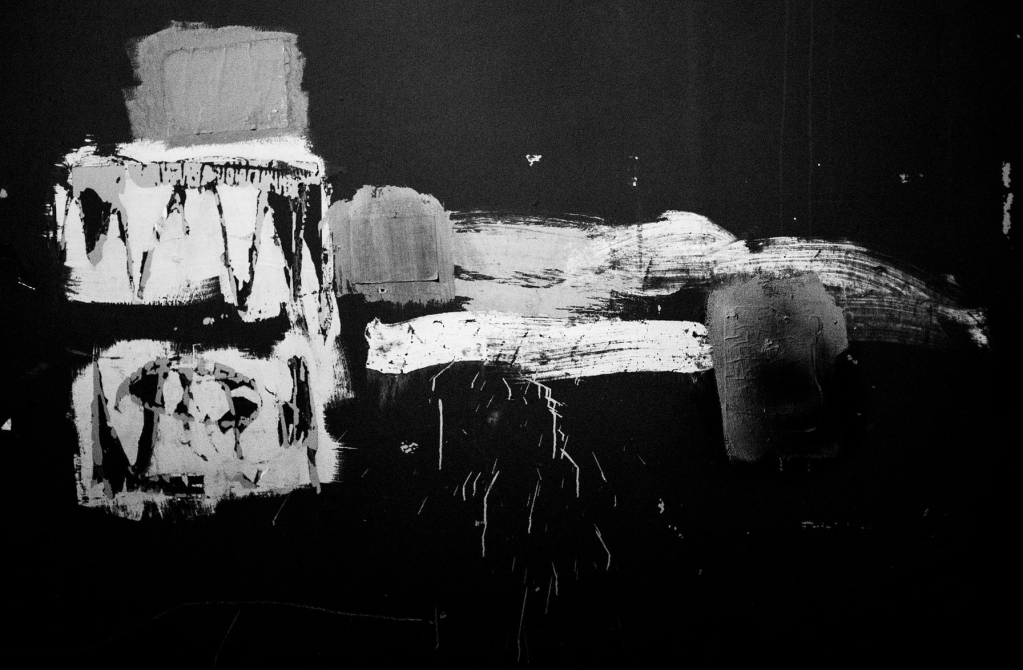
“On the role of ink, and ink can also be seen in the use of background in photography, because the ink that spreads on the paper in different layers, creates areas of black and gray without well-defined boundaries, which can result in a blur linked to the camera’s aperture. It’s true that in certain projects, especially nighttime projects, it’s partly a technical constraint to take photos at full aperture with a shallow depth of field, but it’s also a style that I like. This style also relates to painting, because even before photography, there were painters who painted with less detail in the background. So, a blurred background, even in painting, is something that is also found in photography when using certain lenses at full aperture”.
Coming back to your inspirations, you mentioned both painters and photographers, but I’d like to emphasize another aspect if I may. Regarding the photo book you released earlier this year, there is also the importance of the paper itself — the physical medium on which the photograph is printed. Beyond technique, inspiration, or concept, I personally feel that the character of a photograph is deeply influenced by the paper and ink used for printing. And it seems to me that this dimension also plays a very important role in your latest work ?
“The ink used in risography is extremely rich and deep, yet the process itself does not always allow for very dense blacks. Although the ink is naturally very dark, achieving heavy ink coverage in print can be technically difficult. During some of the print tests, the paper even tore inside the machine because it had become too saturated with ink. Together with the printer, and thanks to the considerable efforts of the workshop at the Atelier du Palais in Arles*, we pushed the process to its limits in order to obtain the deepest blacks possible — right to the edge of what the paper could withstand.”
You, who immersed in this Beijing underground world that no longer exists as you experienced it – what would you like to share with people who encounter your work?
“There are people who may have shared these experiences, who carry the same memories of those places, and who might be glad to reconnect with them through this work. Others may have no prior knowledge of them, but will be curious to discover them.
For some, it may echo memories from different countries, cultures, or contexts—different in appearance, yet still carrying similar emotional or lived experiences. And for others, the theme of memory itself may resonate more broadly, even if it is not directly related to the underground or specific locations; they can still find something within it. Overall, it is a work that aims to reconstruct fragments of memory and sensation.”
And your intentions for the close future?
“I want to keep the book alive because it’s important to me. Also, I want to move on to my next project, to be in a new creative phase again, and with the book, I want to continue to promote it for as long as possible. This is the beginning of the book’s life”.
* The photobook Beijing Reminiscences was printed in Arles with Atelier du Palais.

